Ghillie Suit Shop Blog RSS
Solo Cottontail Hunting Tips. Part II


When scouting, look for rabbits signs and if they are near deep cover, that's your best spot, however wait until the right hour to start hunting.
On this regard, rabbits tend to be more active at sunrise and sunset, when deeps provide additional cover to their movements, so wake up early or wait until sunset to begin your hunting, that way your odds will increase dramatically.
2. The pattern is all about
Walking on a straight line is what most of hunters do, so rabbits learn to stay still until danger goes away; but predators don't walk straight; since they use smell instead of sight, they tend to move from one side to another following the trace.
Then if you walk on a zig-zag pattern or even weaving, rabbits will get nervous, in fact, the closer you are, more nervous they will be until being forced to jump out from that deep cover and run away from you.
Solo Cottontail Hunting Tips. Part I


To enjoy such moment, full your bag with rabbits and have an edge despite the fact of being alone, just follow the next simple tips:
1. Search where no one else does
Hunters tend to have a pattern and usually tend to spot the same hunting grounds, however that doesn't mean all rabbits are on the same place, moreover these animals learn to identify pressure and change their habits as their territories as well in order to stay safe an away from hunters.
So looking for rabbits away from most of hunters search is a good idea. Scout on abandoned properties, junk parks and peripheral, abrupt terrains from where most of people prefer to stay away.
You will have a lot of surprises finding all those rabbits trying to stay away from hunters.
2. Learn to identify rabbits sings
It's hard to see such a small animal hiding behind the bushes, but if you know to identify signs of their presence, everything will be easier.
On this regard there are two major signs of rabbits: depositions and running trails.
Whitetail Hunting: The Secret Behind Success


What really makes the difference between a good withe tail hunter and a remarkable one is the way to do things, paying attention to details and proceed consistently over and over again, that way you always will have good results because your acts are those required for a particular situation ever.
So, first thing about behaviour is to keep always eyes wide open and register even the tiniest detail.
It's not enough just to see a buck or a group of deers when you are scouting; a lucky newbie might see them too, but did you realize about the exact time you found those deer?, from where was the wind blowing? It was on a high pressure o low pressure area?
Every single detail, no matter how meaningless it seems, will count when you bet for consistency and repeatability.
Here we achieve a second behavioural characteristic of top level hunters: Hard working.
Because only after long scouts, detailed data collection and a lot of hiking you will gather enough information to catch the best buck ever!
If you think that a couple of scouting days is enough, you are on the wrong way. In fact the top rated, highly successful whitetail hunters expend more time scouting than hunting... and why?
Rubber or Leather Boots, which is the best choice for hunters?


One century ago there were not too many options and probably most of hunters didn't face a hard time choosing the best boot for hunting, but nowadays there's plenty of models and materials which make selection pretty much harder.
Particularly materials are at the center of discussion. A long time ago boot was synonymous of leather but after the introduction of rubber boots things have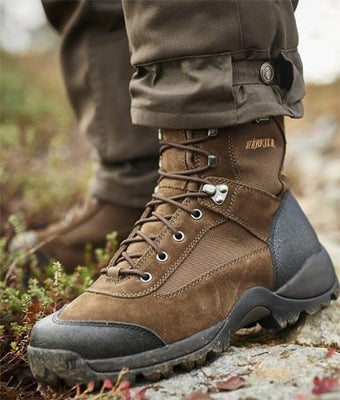 changed a little bit, and the debate continues...
Those who prefer rubber boots sustain that they are lighter and protects feet and legs better from wet; in addition rubber boots are easier to clean and store making them a conveniente garment piece.
On the other hand, retractors from rubber boots state this type of footwear does not provide enough insulation, fits less comfortable and, the most important, rubber smell might reveal your presence.
Even when there's not scientific evidence supporting the last statement, certainly rubber odor is characteristic and it would not be a surprise if animals begin to identify it as a menace, especially on high pressure areas; after all rubber scent is not found on nature being that enough to alert animals about an "unusual situation".
Field Dressing Bird Game


Most of harmful bacteria are not outside the corpse but inside. Gut bacteria is responsible of most of meat waste when any game is not field dressed soon or properly, so taking out viscera is crucial to keep your bird game meat fresh and good.
Then first thing to do is remove gut and any other inner organ, to do so unplug feathers on the midline from the breast bone to the anal opening. Afterwards make a skin incision with a sharp knife taking care to avoid inner structures.
Once the abdominal cavity is open, use your hand to pull out guts and all other inner organs avoiding leakages which might contaminate meat.
3. Take rid of blood
Blood is not good for meat. It avoids fast cooling, favours bacterial growth and attracts flies and other insects, so taking rid of if is one of success keys.
If you are working on a fixed spot it's possible to cut neck vessels and hang up the corpse with the head down to drain blood. If not, you may fill abdominal cavity with dry grass in order to absorb blood and keep bugs away.