Ghillie Suit Shop Blog RSS
How to keep you warm while hunting


First thing to know is that regardless the outside temperature when beginning, you need to be prepared to face several degrees up and several degrees down along the day, especially if you are covering long distances on a sunny day. On this case you may be walking on a snowy environment and still feel hot, so be prepared to adapt quickly to outside temperature.
The best choice for doing it is layers dressing. Use as much clothes layers as you need to feel comfortable outside, regardless temperature; at the same time you need to have extra clothing layers on your backpack in case of a temperature drop.
Once outside, put on or remove clothing layers according to outside temperature and your own convenience. If you feel too cold, add an extra layer but if you are sweating profusely, perhaps it's time to remove one or two layers.
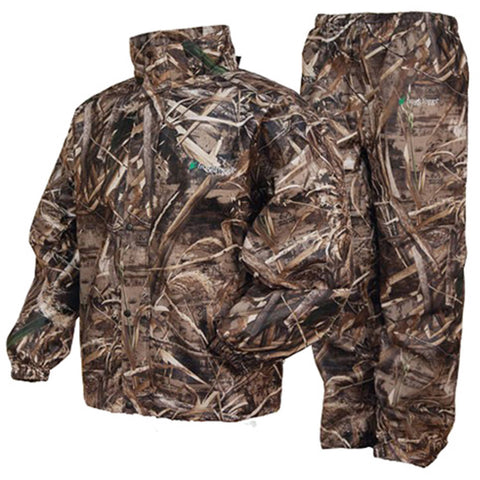
Remember that the outer layers must be your camouflage clothes and orange vest, so extralayers must be beneath the camouflage. On this regard remember to buy an extra-sized camouflage clothing in order to leave room to extra clothing layers.
Essentials about Rabbit Hunting


Let's see what you need to know to start!
1. Hunting License
You need a valid hunting license to hunt rabbits on both, public and private lands. On public lands no further requirements are need but in private properties you need authorization from the land owner.
In some states as Oregon, if you are hunting on your own land no hunting license is required, however just to be sure, refer to your hunting area own regulations in order to avoid law infringement.
2. When to hunt
Even when it's possible to hunt rabbits and lures all year long (in most of states, check for your local area regulations), the best time of the year to hunt rabbits is late fall and early spring.
On late fall weakest rabbits will be vulnerable due to the temperature drop, higher energy expenditure and lack of food; so it will be easier for you to find them, especially on snowy areas.
On the other hand, rabbits are very active during early springtime recovering from the long winter, so they will be moving around early grass and brushes looking for food, then you have increased odds to locate and fire rabbits.
Duck hunting with a bow?


1. Stealth is the key
Ducks' keen sight will perceive the minimal movement before you are able to shoot an arrow, so total invisibility is required, if not, don't waste your time.
To achieve such degree of stealth you need a blind, there's no other way to hunt ducks with bow and arrow since ducks will detect you before you are able to do nothing.
But regular blinds are not suitable for this task, there's no room for all your gear, and it will be almost impossible to move easily to take a shoot, especially considering that you might be aiming to any point.
Thus an extra large blind is required; one big enough to allow all your gear inside leaving space for your movements.
Once set, remember to cover it with reeds and weeds and blend it as much as possible with the surrounding environment, otherwise ducks will fly away.
Canada Geese Hunting Basics


2. Study geese routines
Scout the area where you are hunting on every day at dusk. Every morning geese tend to feed on the same area they were feeding the afternoon before, so if you scout the area everyday it will be possible to identify where geese are feeding and set your decoys near that place. You may have for sure that the birds will be there the next morning.
In addition you will be able to identify the flock leader and learn its communication and behavioral patterns. By doing this you will be able to mimic the leader's call the morning after and attract geese to your trap.
3. Set up your decoys on a different manner every day
Avoid repeating the same pattern day after day, if you don't do so, geese will be able to spot you as a danger and will keep away of your shooting range. To avoid this problem set up your decoys on a different arrangement each day.
You may choose a large, spread distribution one day while the other the set up may be a group scattered disposition; the aim is to mimic the way birds behavior on the ground in order to avoid a human made pattern.
How to field dress a duck


1. Dirt Out
First thing to do before anything else is to wash the duck and remove rests of soils, faeces and dirt from the body surface. Failing on this step might lead to contamination that will ruin all the meat later.
2. Pluck out feathers
Do this by hand, taking care to avoid skin damages. This is the most difficult part of the job but if you have some boiling water available it's a good idea to immerse the body on it before plucking feathers.
Don't remove skin; this is the first layer of flavour and protects the delicate inner meat.
3. Remove inner organs
Secure the bird breast down and do two parallel cuts along the backbone from tail to head; afterwards pull the head to remove it from the carcass with the backbone and all internal organs attached to it. Sweep the inner cavity with paper towels.